
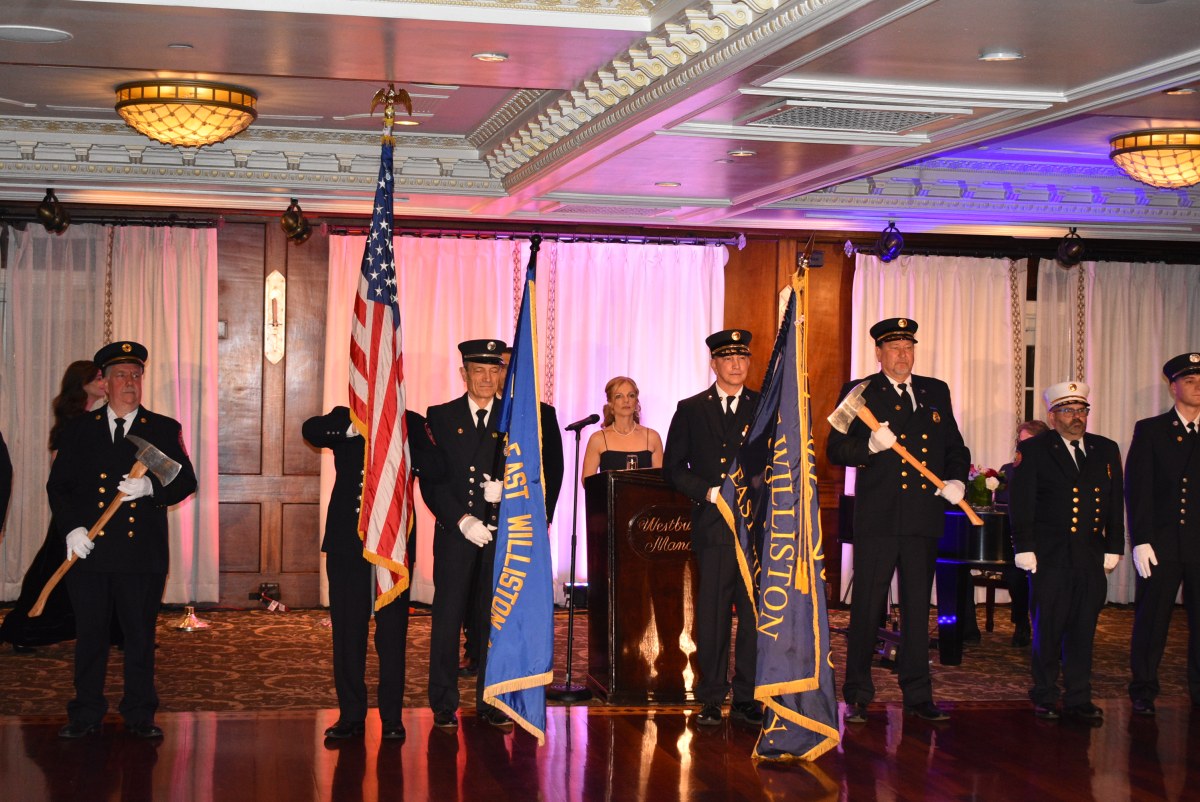


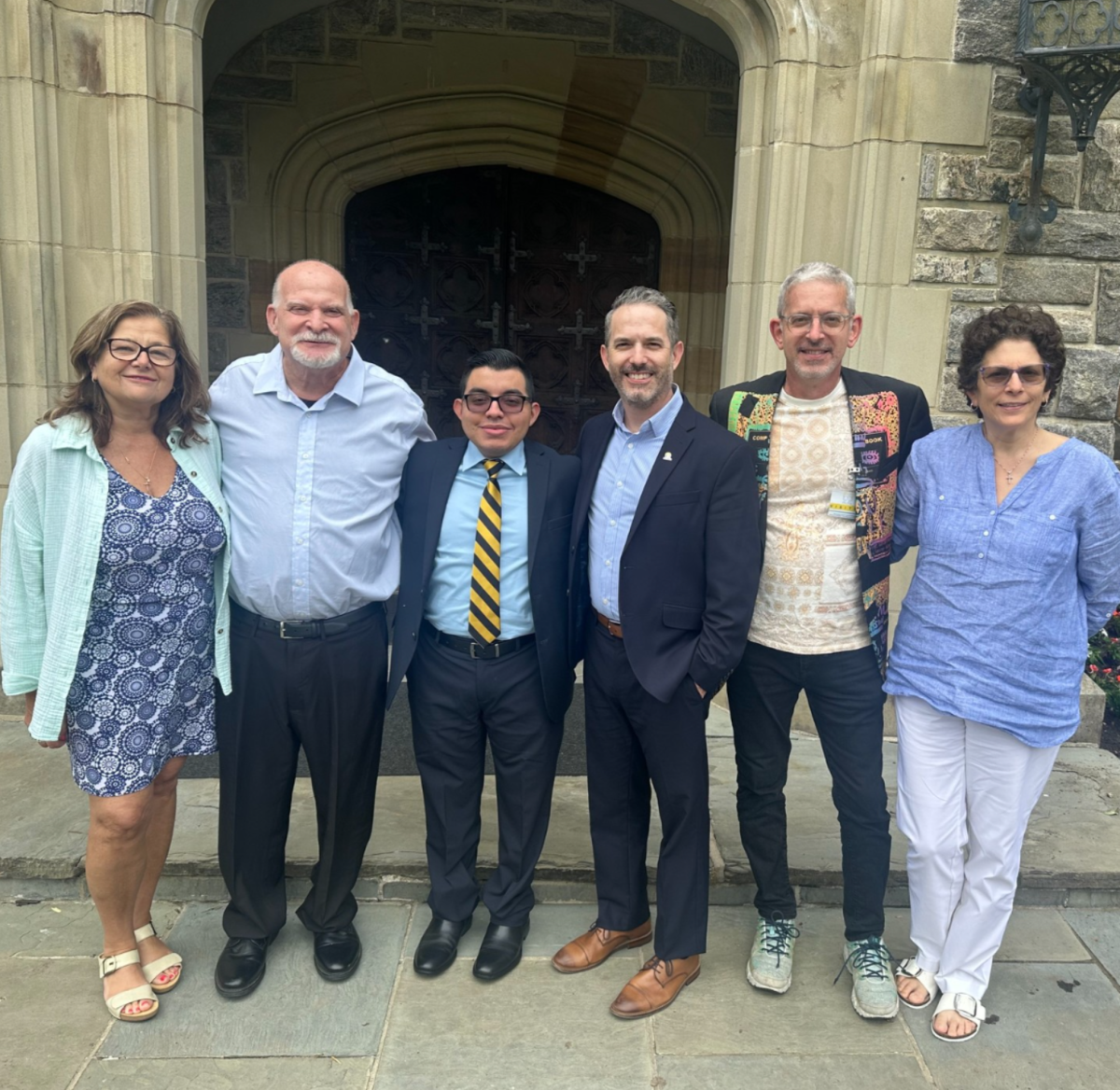

Residents packed Westbury Manor on April 23 for a centennial gala celebrating East Williston’s 100 years as a Nassau County village, capping a season of events with dinner, dancing, and a Broadway-caliber National Anthem.
The night drew elected officials and neighbors from across the county to mark a milestone a century in the making. East Williston Mayor Bonnie Parente took the podium to trace the village’s founding back to a deliberate act of separation, when early residents of East Williston and Williston Park agreed to use the railroad tracks as the dividing line between the two communities.
“Our differences make up today’s fabric of what East Williston has become,” Parente said. “Our village is our binding, our connection, our commonality. It’s where we call home.”
That founding instinct, she explained, was never really about rivalry. It was about control. “The predominant reason our village was created was to manage rapid development, preserve large lots and to create what we now know as local zoning,” she said, describing the original vision as “colonial homes on equally sized lots for workers traveling to the city.” A century later, those zoning principles still shape what East Williston looks, and feels, like.
The gala included a cocktail hour, a sit-down meal, dancing, and an award presentation to former Trustee Rafaella Dunne. The East Williston Fire Department presented a flag to the village, and Broadway singers Nathaniel Hackman and Kaley Ann Vorhees performed the National Anthem. Parente also publicly thanked Village Clerk Joanna Palumbo for organizing the event, which required coordination across months of centennial programming.
The guest list reflected the village’s standing in Nassau County civic life. New York Assembly Minority Leader Ed Ra attended, as did New York State Sen. Jack Martins, Nassau County Comptroller Elaine Phillips, County Legislator Scott Strauss, and North Hempstead Town Supervisor Jen DeSena. Several neighboring village leaders also came out, including Mineola Mayor Paul Pereira, Sea Cliff Mayor Elena Villafane, Plandome Manor Mayor Barbara Donno, and Baxter Estates Mayors Nora Haagenson and Ralph Ekstrand. Williston Park Deputy Mayor Kevin Rynne and Trustee Michael Uttaro, who also serves as County Fire Marshall, were present as well.
Parente’s remarks weren’t all historical.
She told the crowd that the village has been tracking and repairing underground water leaks, an effort she said saves money directly for local taxpayers. She said East Williston is also pursuing reimbursable road improvements and buying new equipment for its first responders. The current Board of Trustees and former village officials both drew praise from the mayor for their work over the years.
Two days later, on April 25, East Williston closed out the weekend with something longer in scope. The village buried a time capsule containing significant items, records, stories, and memories from this moment in the village’s life. It won’t be opened again until 2101, when East Williston marks its 175th anniversary.
Think about that number. Seventy-five years sealed underground.
Whatever gets pulled out of the ground in 2101 will represent who East Williston is right now, in the spring of 2026. Whoever opens it will be reading a letter from us, essentially. The residents at Saturday’s burial ceremony were choosing what to say.
The centennial has been a running theme through East Williston’s calendar this year, with the gala at Westbury Manor serving as the signature event among several planned to mark the occasion. As Long Island Press covered the weekend’s events, the back-to-back nature of the Thursday gala and Saturday capsule burial gave the centennial a sense of real closure, at least for this chapter.
East Williston is a small village by most measures, tucked into the northwest corner of Nassau County with a few hundred households and a school district it shares with Williston Park. But small doesn’t mean quiet, and it doesn’t mean unambitious. The village’s founding was built on the idea that local government, done right, can protect what residents actually value: space, stability, and a say in what gets built next door.
Parente put it plainly when she described the parallel stories of East Williston and Williston Park, two communities that split along a set of railroad tracks a century ago and built something different on each side. “Two different visions and two success stories,” she said, and that framing stuck with the crowd inside Westbury Manor long after the dancing wrapped up.
The time capsule, now buried somewhere in the village, holds whatever East Williston decided was worth saving from its first hundred years. It’ll stay there until 2101, waiting for a village that doesn’t yet exist to come looking.