

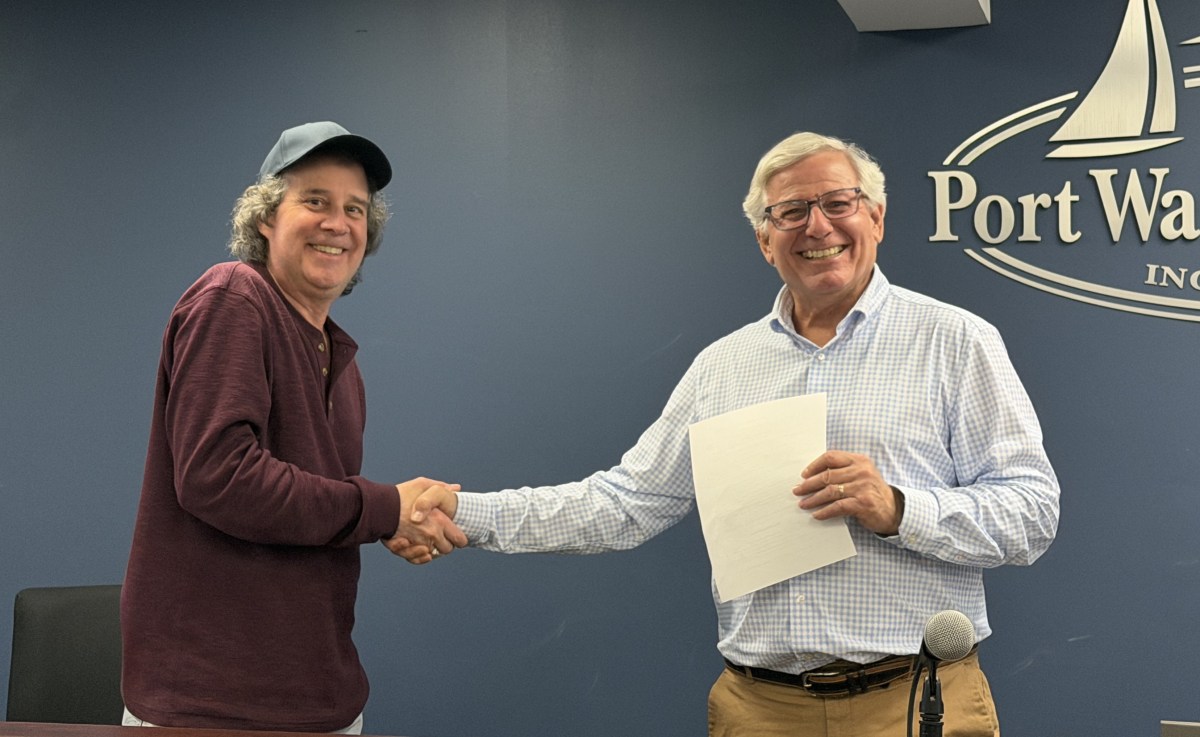







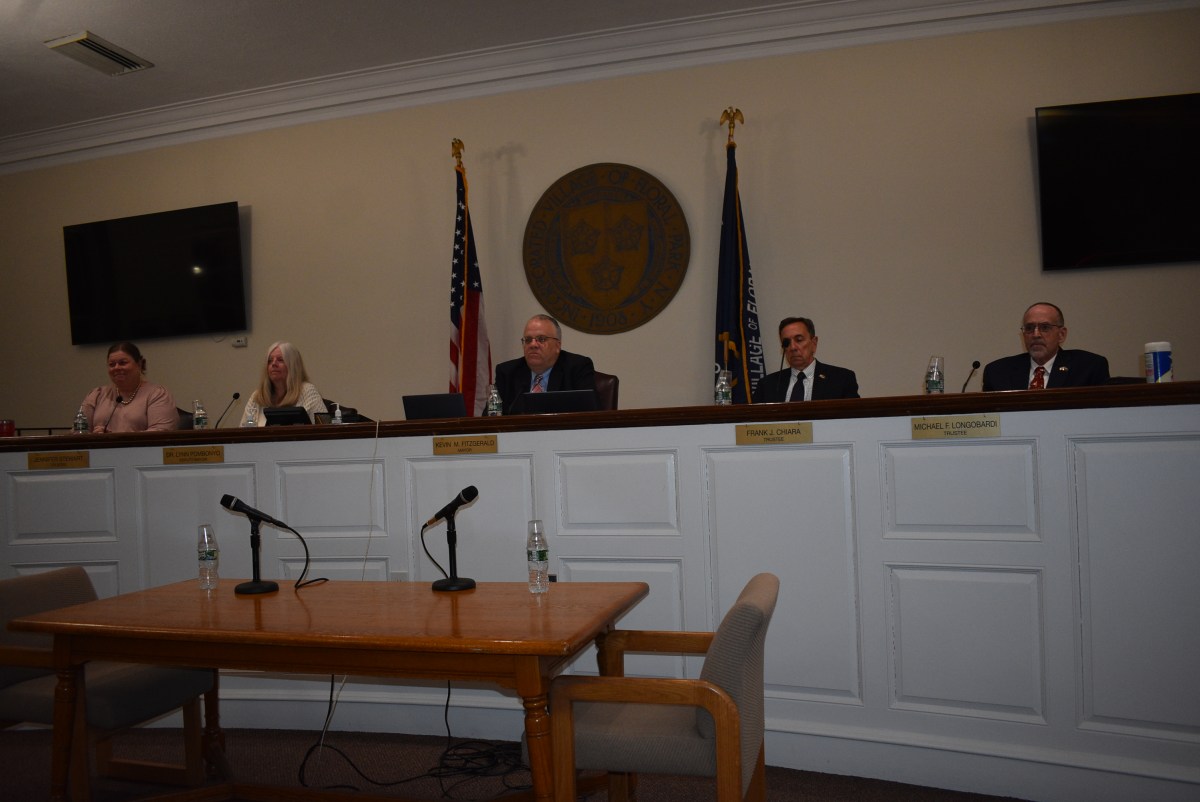
Port Washington North’s Board of Trustees approved a $5.58 million budget for the 2026-27 fiscal year on April 14, cutting total spending from the prior year’s $5.7 million plan while nudging the tax levy upward.
The adopted levy stands at $1,520,000, roughly $30,000 more than last year, staying just under New York State’s 2% tax cap. Homeowners will see the tax rate climb about 46 cents per $100 of assessed value. It’s a modest hit on paper, but Village Treasurer Mary Jo Bella told trustees that the village’s taxable assessment base dropped by more than $53,000, largely because of tax grievances, and that erosion makes every dollar of revenue harder to replace.
Mayor Robert Weitzner didn’t sugarcoat the constraints. “This board will remain lean and prudent with what we can,” he said during the meeting. “We are not going to remove any services. We are providing 100% of the services year in and year out.”
That’s not a small promise for a village operating at this budget scale. Legal costs alone are putting real pressure on the ledger. Port Washington North budgeted about $155,000 for legal expenses this fiscal year, a significant jump from prior years, driven by rising litigation costs and tax certiorari claims from property owners contesting their assessments. Those two forces, shrinking taxable value and growing legal bills, are grinding against each other, and the board knows it.
“That’s the pressure that we’re under right now as a village,” Weitzner said.
The financial picture isn’t entirely grim, and the reason is grants. Weitzner pointed to more than $2.5 million in state grant funding tied mainly to park and playground improvements. Without it, the village couldn’t move forward on those projects at all. “If it wasn’t for these grants, we would not be able to do the park,” Weitzner said. “We never would have been able to come up with $2.5 million.” Nassau County villages of this size don’t have the tax base to fund capital improvements out of pocket, and Port Washington North is no exception. The grant pipeline is doing the heavy lifting that the levy can’t.
The meeting also handled personnel business. Weitzner swore in Steven Cohen as deputy mayor following Cohen’s reelection. Cohen pledged to “faithfully discharge the duties” of his office during the ceremony. The board, as reported by Long Island Press, also approved a round of annual contracts covering engineering, auditing, and consulting services, along with routine procurement and workplace safety policies.
Not all the evening’s business was budgetary. Trustees heard concerns about traffic and pedestrian safety tied to delivery operations at Soundview Market Place, where a restaurant called Wonder has been drawing increased vehicle activity. Superintendent and Building Inspector Robert Barbach said the board was right to hear those concerns out. “This is what we’re here for, to hear that there are situations,” Barbach said, as trustees weighed options including designated pickup zones and formal traffic analysis.
The board also addressed a death at a construction site on Shore Road. A 34-year-old man was found unresponsive in a portable toilet at the site. Weitzner confirmed the individual was not a Port Washington North resident but had been in the broader Port Washington area. Police responded. “That was actually handled very quickly and elegantly by the police department,” Weitzner said. The village board didn’t dwell on the incident, but the fact that it came up in a routine municipal meeting reflects how much ground a small village board has to cover in a single night.
For context on how New York’s property tax cap rules constrain local budget decisions, the state’s 2% ceiling applies to the levy increase, not the rate, which means boards can end up raising rates even when the overall levy growth is technically capped. That’s exactly what happened here. The New York State Comptroller’s office tracks compliance for municipalities across the state.
What the April 14 meeting showed is a village board trying to thread the same needle that most small Nassau County municipalities face right now: holding services steady, managing a shrinking assessment base, absorbing legal costs that have ballooned without warning, and depending on Albany’s grant cycle to fund anything that looks like progress. The $5.58 million budget passed. The harder work is keeping it balanced when the next round of tax grievances comes in.